



A new data analysis is offering a clear, practical look at where dogs are most likely to encounter ticks—and where pet owners are actively searching for help with bites, removal, and prevention.
By examining thousands of real-world searches related to tick issues, the study highlights not just awareness, but likely exposure. As tick season ramps up, it’s a useful snapshot of where vigilance matters most.
The data points strongly to the Northeast as the most active region for tick-related problems in dogs.
- Maine ranks highest, with 269.3 searches per 100,000 residents
- Vermont follows with 224.9
- New Hampshire comes in at 212.7
This clustering suggests a concentrated regional issue, where tick encounters are more common and dog owners are frequently dealing with removal and treatment.
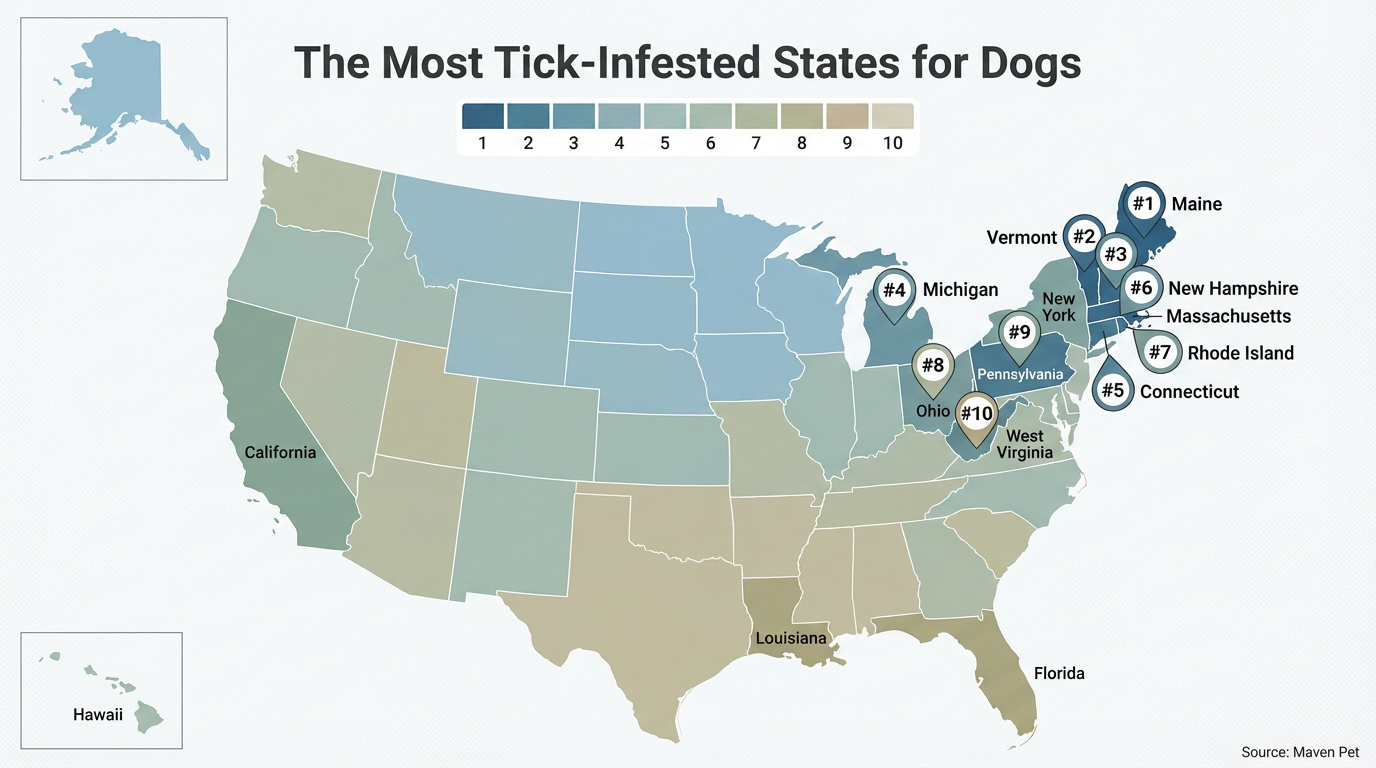
Other states rounding out the top 10 include Michigan, Connecticut, Massachusetts, Rhode Island, Ohio, Pennsylvania, and West Virginia—many of which share similar climates and wooded environments that ticks thrive in.
At the opposite end, Alaska reports the lowest level of tick-related searches, indicating far less prevalence.
Where California Stands
California sits closer to the middle of the pack, ranking 30th overall. While that suggests a lower relative risk compared to the Northeast, tick exposure is still very much a reality—especially in grassy, wooded, or coastal areas.
For dog owners in Southern California, ticks may be less of a daily concern, but they’re far from rare—particularly during warmer months.
Rather than relying on reported cases alone, this study uses search behavior as a proxy for real-life experiences. When owners are repeatedly searching phrases like “how to remove a tick from a dog” or “tick bite treatment,” it’s usually because they’re dealing with it firsthand.
In other words, these rankings reflect where ticks are not just present—but actively causing problems.
What Pet Owners Should Do
Regardless of location, tick prevention and awareness are essential:
- Check your dog regularly, especially after walks in grass, trails, or wooded areas
- Pay close attention to ears, paws, under the collar, and around the tail
- Use veterinarian-recommended prevention (topical, oral, or collars)
- If you find a tick, remove it promptly and carefully using proper tools
- Monitor for symptoms like lethargy, fever, or loss of appetite after a bite
The Bottom Line
Tick risk isn’t evenly distributed across the country—but no region is completely immune. For pet owners, the takeaway is simple: know your area, stay consistent with prevention, and don’t ignore the small signs.
Because when it comes to ticks, early action makes all the difference—for both comfort and long-term health.