

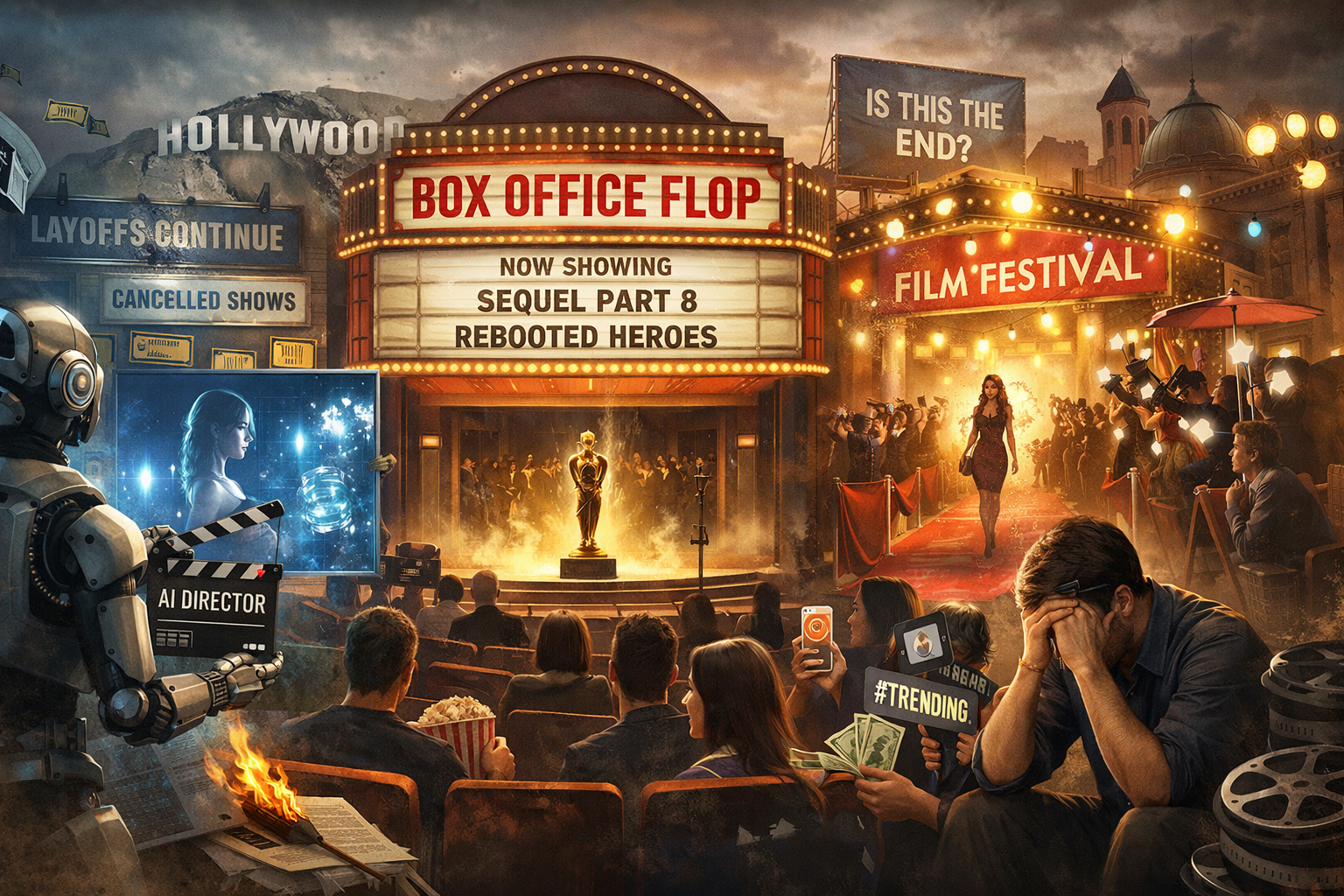
2025 was not a feel-good year for the entertainment industry. It was a year of disruption, contraction, experimentation, and visible anxiety about the future. While creativity persisted, it often did so under pressure. These were the moments that truly defined the year.
-
AI Became an Industry Fault Line
Artificial intelligence moved from curiosity to consequence. Studios tested AI-assisted scripts, studios debated digital replicas, and creatives openly questioned job security. The conversation shifted from “if” to “how far is too far,” with unions, executives, and artists rarely aligned. -
Layoffs Became the Industry’s Background Noise
Major companies quietly—and sometimes publicly—cut staff across film, television, and music divisions. Development teams shrank, marketing departments consolidated, and long-term careers felt suddenly fragile in an industry once defined by stability at the top. -
Streaming’s Growth Myth Finally Cracked
Subscriber numbers plateaued or declined, forcing platforms to pull back spending and cancel projects mid-stream. The promise of endless content collapsed into fewer series, shorter seasons, and more risk-averse programming decisions. -
The Box Office Became Unpredictable
Some films soared while others vanished almost immediately. Star power no longer guaranteed ticket sales, and audiences grew selective about what justified leaving home. Studios were left recalibrating release strategies in real time.
-
Awards Season Lost Its Authority
Ratings continued to slide, relevance was questioned, and public enthusiasm felt muted. While wins still mattered within the industry, awards no longer dictated careers or box office outcomes the way they once did. -
Film Festivals Reflected a Divided Industry
Festivals remained important, but the tension was evident. Big studios pulled back, independent films struggled for distribution, and deals once closed overnight took months—or never materialized. -
Television Entered Its Contraction Era
Fewer series were greenlit, episode orders shrank, and “event television” became rare. Prestige storytelling survived, but experimentation became harder to justify in a cost-cutting environment. -
Creators and Influencers Filled the Vacuum
As traditional pipelines stalled, digital creators continued to capture attention and revenue. For better or worse, influence became currency, reshaping marketing strategies and challenging legacy gatekeepers. -
Audience Trust Continued to Erode
Between recycled franchises, rushed projects, and algorithm-driven decisions, audiences grew skeptical. Word-of-mouth replaced marketing hype, and viewers became faster to disengage when content felt manufactured. -
The Industry Quietly Questioned Its Own Future
Perhaps the most defining moment of 2025 was internal. Studios, artists, executives, and crews openly asked what entertainment should look like next—and who it should serve. The answers were far from unanimous.
2025 wasn’t a year of triumph; it was a year of reckoning. The entertainment industry didn’t collapse, but it was forced to confront uncomfortable truths about technology, labor, audience fatigue, and sustainability. What comes next will depend on whether those lessons are addressed—or ignored.