


The LA Art Show concluded its 31st edition this January, reaffirming its position as Los Angeles’ longest-running art fair and a key anchor of the international art calendar. Under the direction of producer and artistic director Kassandra Voyagis, the fair welcomed more than 90 exhibitors from 25 countries, including Ireland, France, Greece, Israel, and South Korea. The next edition of the LA Art Show is scheduled to return to the Los Angeles Convention Center January 6–10, 2027.
Returning to its January roots, the fair opened on January 7 with an Opening Night Premiere that drew the largest attendance in its history. Hosted by actress and entrepreneur Sasha Pieterse, the evening benefited the American Heart Association and attracted a wide range of attendees, including Patrick Schwarzenegger and Abby Champion, Jane Seymour, and Caitlin O’Connor. The strong opening set the tone for a week marked by high engagement and steady sales.
The 2026 edition highlighted intersections between visual art and music, with notable works by Paul Simonon of The Clash and former Heaven’s Basement drummer Chris Rivers. Rivers’ presentation at Pontone Gallery drew collectors and industry figures, including January Jones, who acquired multiple works, and Wes Borland of Limp Bizkit.
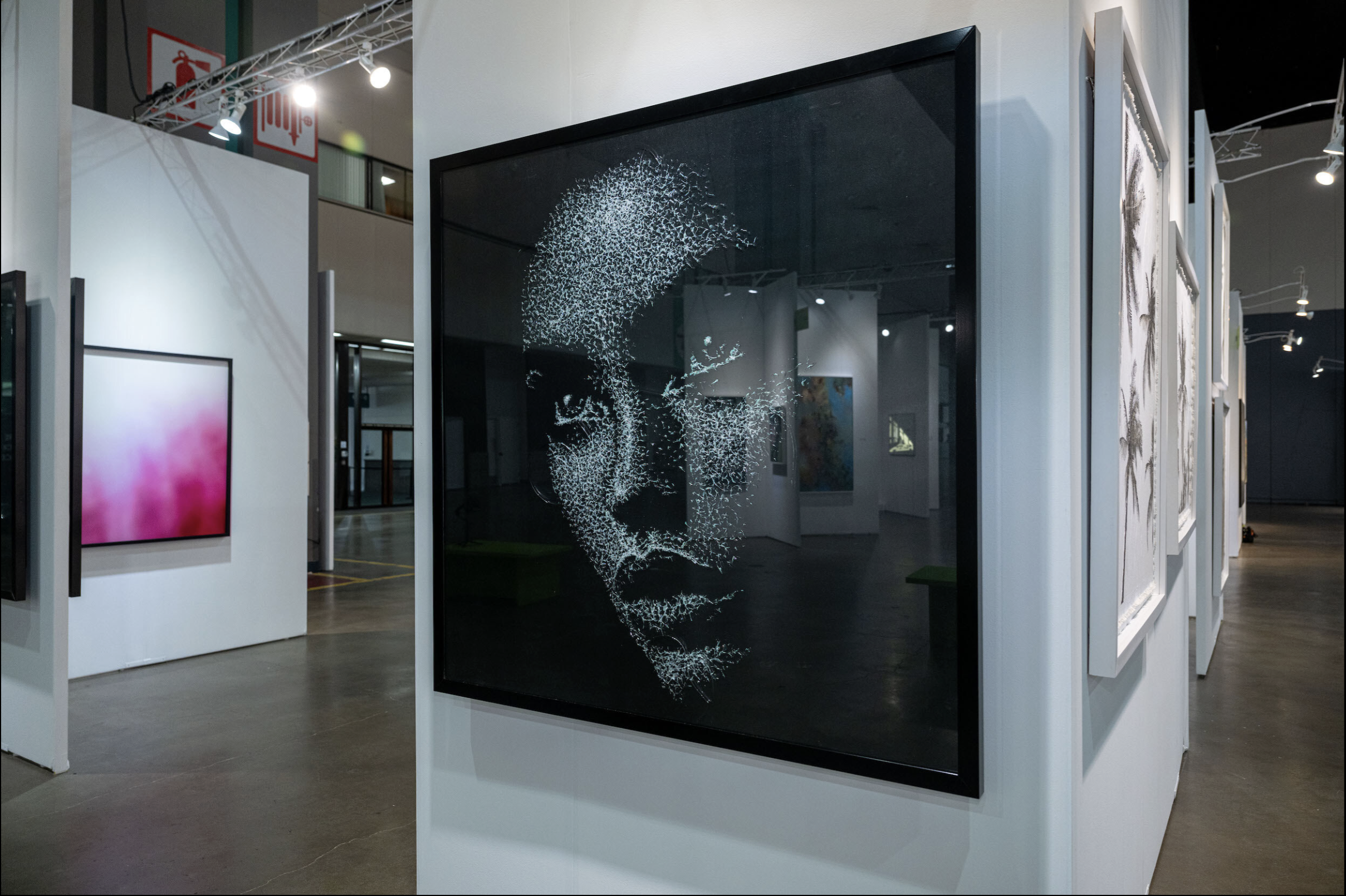
New and returning galleries reported robust results. Swiss gallerist Laurent Marthaler described his first LA Art Show as an exceptionally positive debut, noting strong interest in the work of Simon Berger, whose glass compositions transform fractured surfaces into luminous imagery. Epicentrum Art Gallery of Poland, specializing in works on paper by 20th-century masters including Picasso, Dalí, and Alechinsky, also reported a successful first U.S. fair.
Provident Fine Art of Palm Beach made its LA Art Show debut with the sale of multiple works by Sylvester Stallone, including Cobra, which sold for $850,000. First-time exhibitor Art of Contemporary Africa sold a range of works spanning bronze sculpture and large-scale painting, featuring artists such as Samuel Allerton, Ayanda Mabulu, and Dr. Esther Mahlangu, with prices ranging from $7,000 to $40,000. At the other end of the age spectrum, nine-year-old Los Angeles–born artist Liha Park sold four intuitive paintings exhibited with Venus Gallery.
Los Angeles–based Fabrik Projects reported a standout year, selling seven works priced between $3,500 and $20,000. Rehs Gallery of New York sold eight works, including Evin Champeny’s mosaic Fifty Shades of Lavender. Miami’s Coral Gallery placed sculptural works by Uruguayan artist Roberto Vivo, while Chicago’s Bert Green Fine Art sold 25 paintings by Grey James, whose figurative works explore vulnerability and strength. Corridor Contemporary reported sales across several artists, including three works by Israeli painter Yigal Ozeri, known for his cinematic portraiture set within natural landscapes.
South Korean galleries also saw strong engagement, with Wald Gallery and OSJ Gallery reporting notable sales as increased visibility in the Los Angeles market translated into collector interest. Themes of immigration and cultural identity emerged across several presentations, including JS Gallery by the Institute of Mediterranean Culture, which debuted OFF SCRIPT, an exhibition bringing together ten immigrant women artists exploring new visual languages beyond fixed cultural frameworks.
A significant addition to the 2026 fair was the inaugural Latin American Pavilion, curated by Marisa Caichiolo. Centered on memory, migration, and identity, the pavilion highlighted emerging artists from across the Americas while examining ancestral narratives and representation. Works sold included pieces by Maca Vivas, Johnny López, Natasha Grey, and Guillermo Bert. Grey’s Mutable Sun (2025), depicting a jaguar alongside Ixchel, the Maya goddess of the moon, served as a focal point within Artier Gallery’s booth.
Caichiolo also curated DIVERSEartLA, an exhibition examining the influence of biennials on contemporary art. A central feature was a mini-retrospective of Marcos Ramírez (ERRE), whose cross-border practice addresses themes of immigration, nationalism, and Latine identity, including landmark works such as Toy-an Horse (1997), originally installed at the U.S.–Mexico border.
As the LA Art Show closed its 31st year, the fair demonstrated both its global reach and its role as a platform for emerging voices, established artists, and cross-cultural dialogue—setting a strong foundation for its return in 2027.