


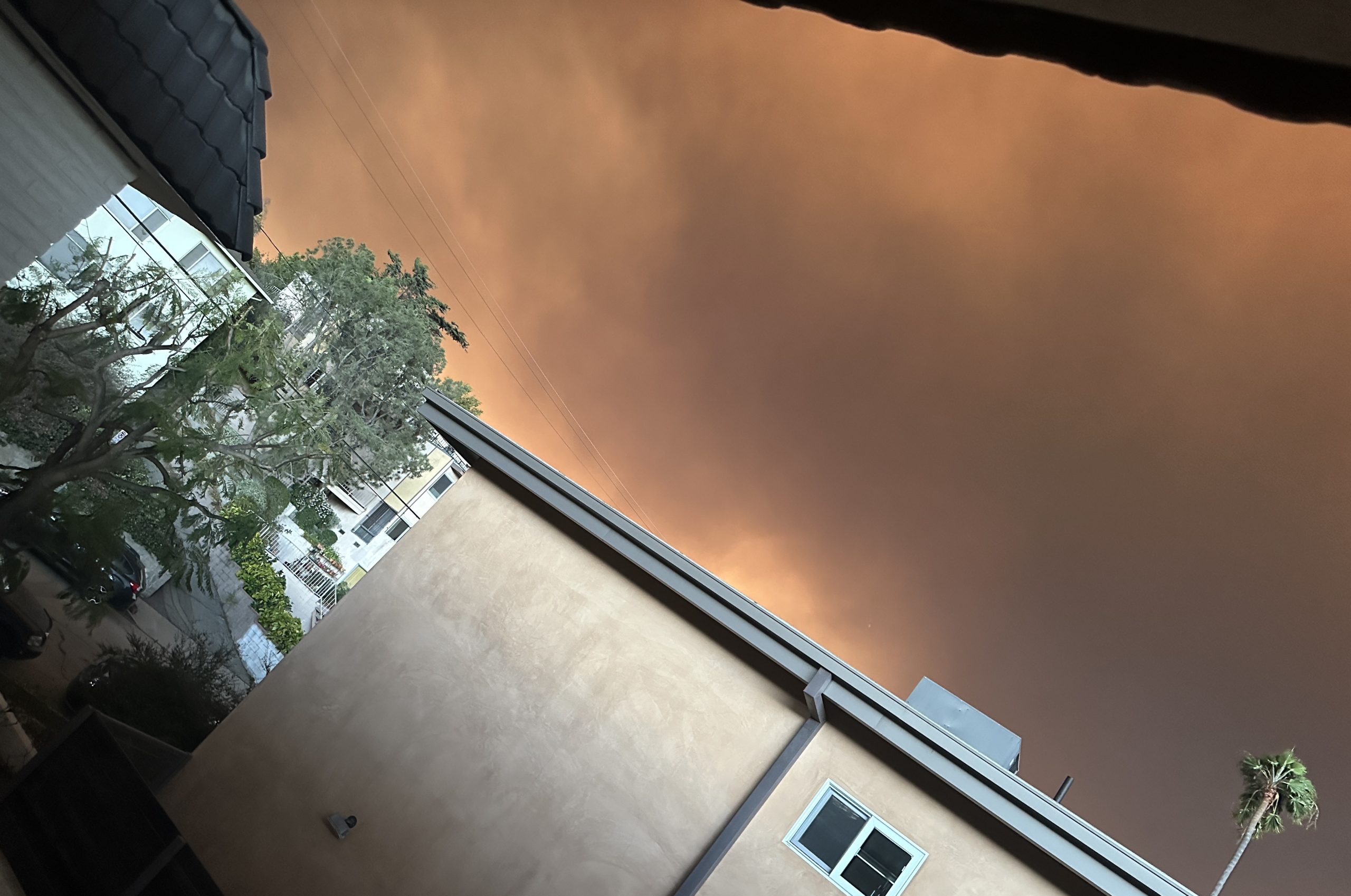
One year has passed since the Eaton Fire and the Palisades Fire tore through Los Angeles, leaving a lasting imprint on the city’s landscape and its people. Together, the two fires became the most destructive wildfire event in Los Angeles history, burning more than 15,000 acres, destroying over 4,000 homes and structures, and displacing thousands of residents. Twelve lives were tragically lost.
The anniversary is both a moment of remembrance and reckoning. Entire blocks were reduced to ash. Childhood homes, family photographs, and irreplaceable heirlooms vanished. Schools, places of worship, and long-standing community spaces that once anchored generations of Palisades residents were wiped out in a matter of days. While the flames were contained within weeks, the emotional and logistical aftermath has lingered far longer.
First responders remain at the heart of this reflection. Thousands of firefighters and emergency personnel battled the blazes around the clock, often for weeks at a time and far from their own families. Their work prevented the fires from spreading even further into dense neighborhoods, undoubtedly saving countless lives.
Rebuilding one year later remains a work in progress. According to city recovery updates, only a fraction of destroyed homes have completed reconstruction, with many more still in design, permitting, or insurance review phases. Infrastructure repairs—roads, utilities, and hillside stabilization—have moved forward, yet hundreds of families remain displaced, navigating temporary housing and prolonged insurance disputes. Delays, underpayments, and denials have become a defining challenge of the recovery process.
The Mayor, reflecting on the magnitude of the loss and the long road ahead, issued the following statement:
“One year ago, the City of Los Angeles faced the most destructive wildfire in our history. Twelve lives were tragically lost, thousands of homes were destroyed, and too many families remain displaced.
We remember all that was lost – the twelve lives, the childhood homes, the irreplaceable family photos and heirlooms, the community spaces that connected generations of Palisades residents. We remember the brave firefighters and first responders who fought tirelessly for weeks on end away from their families. We are also clear-eyed about the lessons learned.
There are no words to articulate the unimaginable trauma, grief, and exhaustion felt by the Palisades community – exacerbated by constant headlines along with delays, underpayments, and denials from insurance providers.
This anniversary forces us to face the trauma head-on. As we collectively mourn, the pain remains palpable. But so does something else now: hope and resolve.
Over the past year, Palisades residents have demonstrated a level of resilience and collective strength that has shown the entire country who Los Angeles is at its core. We don’t turn away from our neighbors in their most challenging moments. We come together to support one another, to forge the path forward. To rebuild even stronger than before.
Full recovery is a long-term, multi-year effort that must leverage innovative solutions to protect the community for the future in the face of more frequent and severe climate threats. We must continue working together alongside the Palisades community and across every level of government, philanthropy, the insurance industry, and the business sector to build on the progress we’ve made and to advocate for what needs to change, including insurance and mortgage forbearance policies and other reforms necessary to support long-term recovery.
I remain committed to continuing to use the full-force of my mayoral power to restore the Palisades community and return families home as quickly and safely as possible.”
Despite the staggering statistics, resilience has become the defining story of the past year. Neighborhood groups, local nonprofits, and displaced residents have rallied together—sharing resources, advocating for reform, and keeping the spirit of their community intact even while scattered across the region.
Recovery from the Eaton and Palisades Fires is far from complete. It is a multi-year effort, shaped by climate realities that suggest these threats will only intensify. Yet one year later, alongside the grief and frustration, there is forward momentum—measured not just in rebuilt structures, but in the resolve of a community determined to return, rebuild, and endure.