

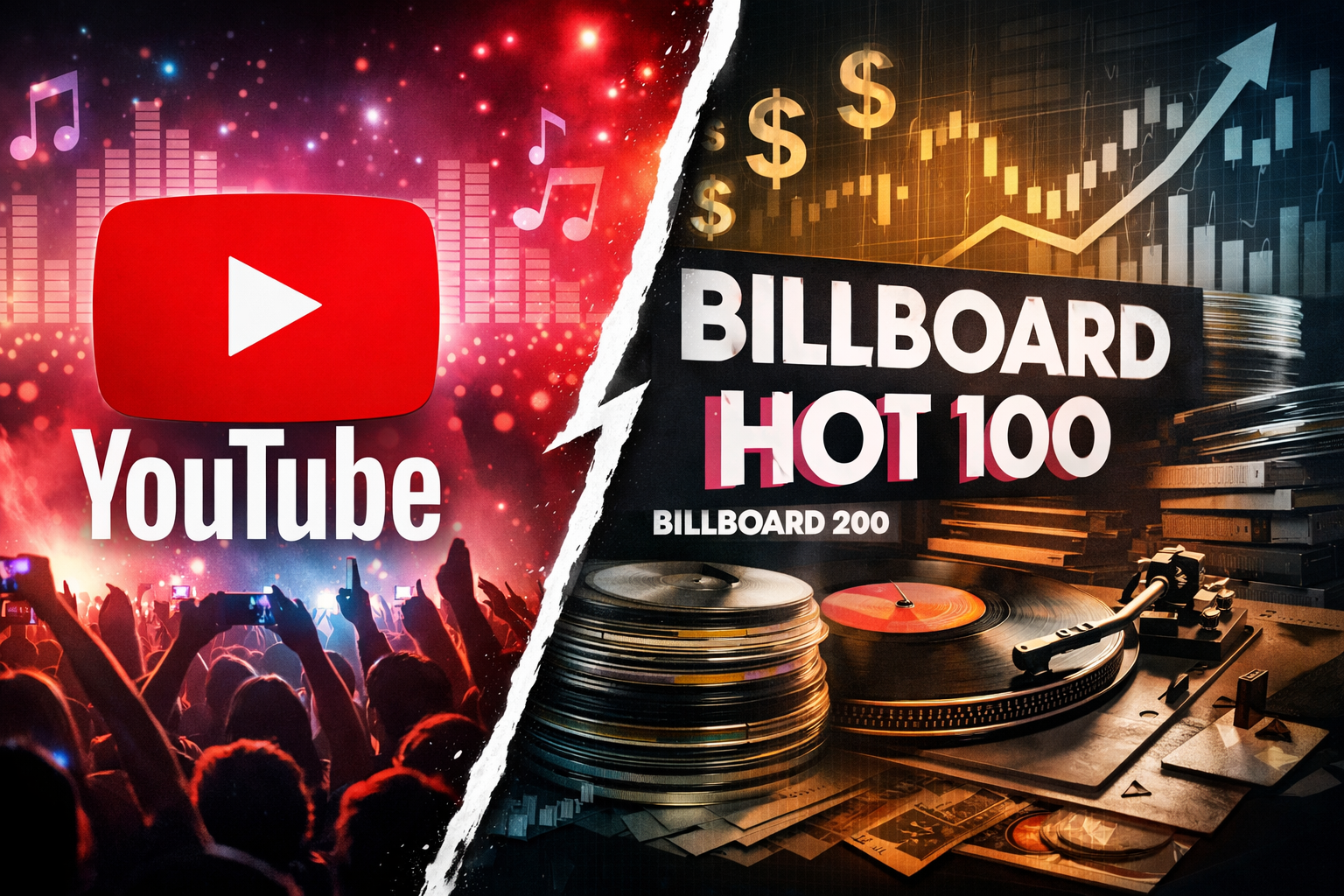
YouTube announced it will remove its streaming data from all Billboard charts beginning in mid-January, ending a more than decade-long relationship that helped redefine how music success is measured. The move follows Billboard’s decision to continue giving greater weight to paid subscription streams over ad-supported listening, a change YouTube says no longer reflects how fans actually consume music.
For decades, music charts were built on physical sales — vinyl, cassettes, and CDs. As downloads emerged in the early 2000s, platforms like iTunes reshaped chart calculations. The biggest shift came in the 2010s, when streaming transformed listening habits entirely. Billboard made history in 2013 by becoming the first major chart to incorporate YouTube views into song rankings, followed by album charts in 2019, acknowledging that music discovery and consumption had moved online.
Today, however, not all streams are treated equally. Billboard’s updated methodology continues to value paid subscription streams more heavily than ad-supported ones, arguing that paid listens generate significantly more revenue for artists and the industry. Under the new formula, one paid stream counts as 2.5 ad-supported streams. Billboard says this better reflects consumer behavior and the economics of modern music.
YouTube disagrees. The platform argues that free, ad-supported listening represents massive fan engagement and should not be discounted simply because a listener isn’t paying a monthly fee. As a result, YouTube will voluntarily withhold its data from Billboard’s U.S. and global charts, meaning YouTube views will no longer contribute to chart rankings.
The decision highlights a growing divide in how success is defined in the streaming era: cultural reach versus financial impact. While Billboard aims to measure music through an economic lens, YouTube is pushing for charts that reflect sheer popularity and accessibility.
As the industry continues to evolve — from physical sales to downloads to streams — this standoff underscores a central question: in today’s music landscape, should charts measure who earns the most, or who is heard the most?