


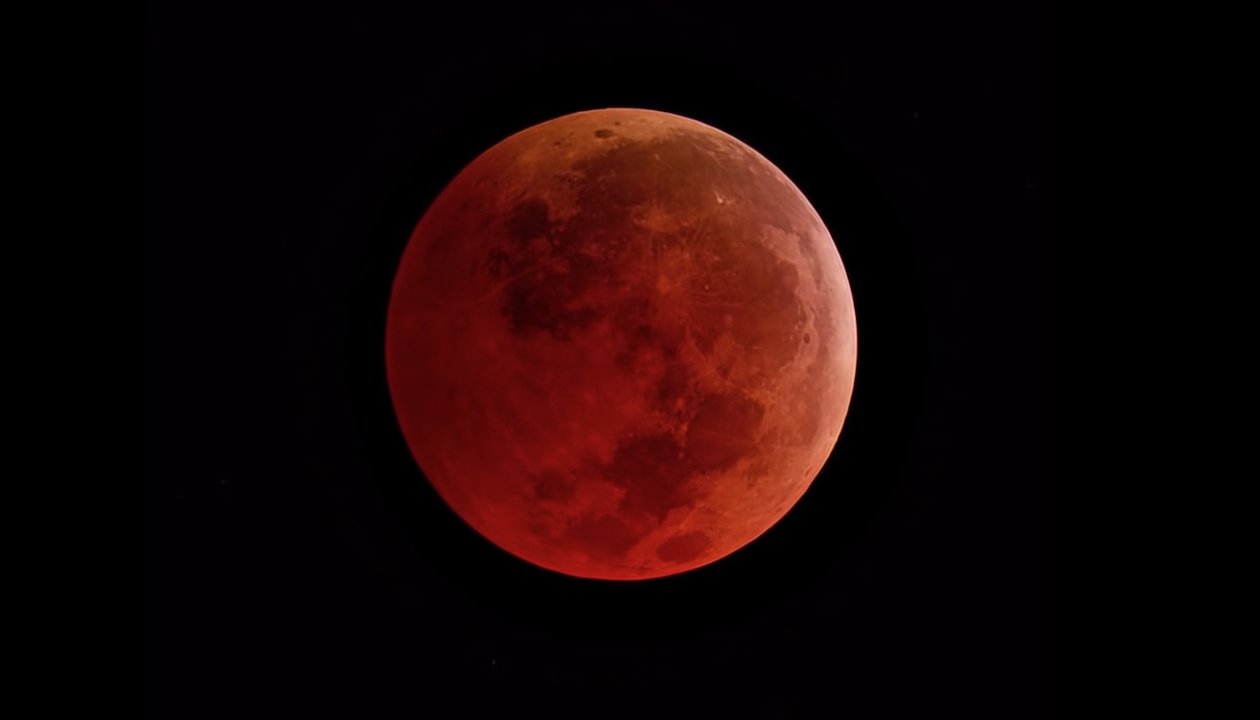
Early on the morning of Tuesday, March 3, 2026, skywatchers across much of North America will be able to witness a rare celestial pairing: March’s Full Worm Moon coinciding with a total lunar eclipse, often referred to as a “Blood Moon.”
During a total lunar eclipse, Earth passes between the Sun and the Full Moon, causing the Moon to slowly dim as it moves through Earth’s shadow. During totality, the Moon can take on a coppery red or orange glow.
Totality lasts from 6:04 am to 7:02 am Eastern Time, with the greatest eclipse occurring at 6:33 am ET. The Full Moon reaches peak illumination just minutes later, at 6:38 am ET. The event is completely safe to watch with the naked eye.
Why “Blood Moon” Isn’t Ominous
“Calling it a ‘Blood Moon’ makes it sound ominous, but there’s nothing supernatural about it,” said Bob Berman, astronomer at The Old Farmer’s Almanac. “During a total lunar eclipse, the Moon doesn’t turn blood-red—it glows more orange and gold, colored by sunlight bent through Earth’s atmosphere.”
Why It’s Called the Worm Moon
Beyond the eclipse itself, the March Full Moon has long been recognized as a seasonal turning point. Traditionally known as the Worm Moon, it coincides with lengthening days and the growing sense that winter is beginning to ease—an early signal that spring is approaching.
Visibility Will Vary by Region
- Eastern U.S. and Canada: The eclipsed Moon will be low in the western sky near sunrise, creating a dramatic “moonset eclipse” view.
- Central and Western North America: The eclipse unfolds higher in the pre-dawn sky, with totality occurring earlier in the morning.
Because moonset times vary by location, readers can check their local timing using The Old Farmer’s Almanac Skywatching Tools:
-
Sunrise & Sunset Calculator: Almanac.com/sunrise
-
Moonrise & Moonset Calculator: Almanac.com/moonrise
To help readers plan ahead and separate long-standing myth from astronomical reality, The Old Farmer’s Almanac has published a series of guides exploring where the term “Blood Moon” came from, how a lunar eclipse unfolds, and what skywatchers can expect to see.
Learn more:
- March’s Full Worm Moon: meaning, timing, and traditions
Almanac.com/content/full-moon-march - What happens during a total lunar eclipse
Almanac.com/what-happens-during-total-lunar-eclipse - What a “Blood Moon” really is—and what it isn’t
Almanac.com/what-blood-moon-and-isnt