


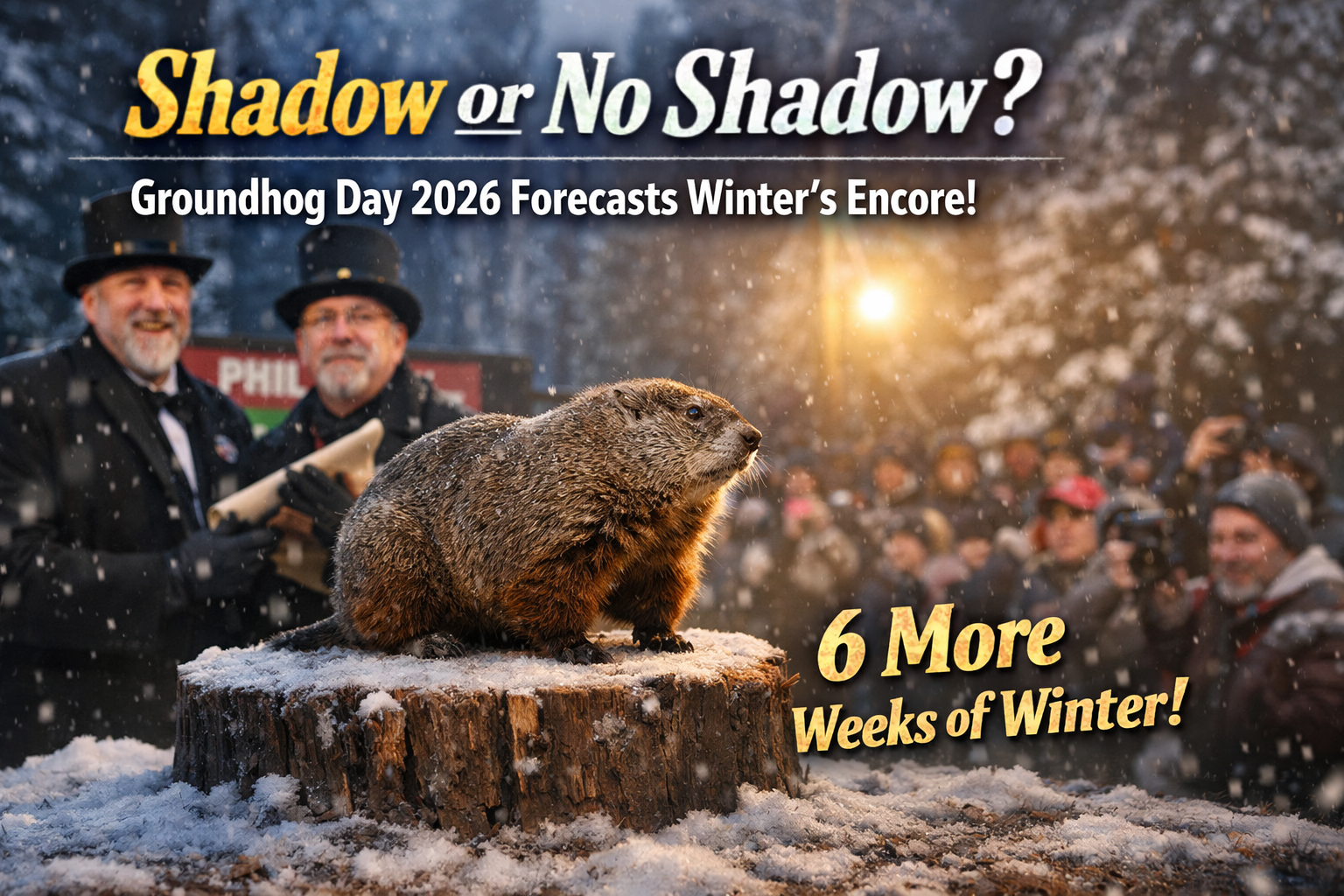
Today — February 2, 2026 — marked another lively Groundhog Day as crowds gathered before sunrise at Gobbler’s Knob outside Punxsutawney, Pennsylvania, to see whether the groundhog known as Punxsutawney Phil would spot his shadow and predict more winter or not. After emerging from his burrow in frigid conditions, Phil did see his shadow, signaling six more weeks of winter, according to the age-old tradition that has delighted (and occasionally disappointed) thousands of onlookers.
The annual event draws tens of thousands each year — bundled in coats, hats and scarves — to witness the furry forecaster’s verdict. Despite Phil’s proclamation, meteorologists and weather analysts note that the tradition doesn’t have scientific backing; real forecasts rely on data, not shadows. Still, for many the charm of this whimsical ritual is rooted more in folklore and fun than in meteorology.
The tradition of using an animal to predict the length of winter comes from European Candlemas Day customs, where the weather on February 2 was thought to forecast the remainder of winter. When German immigrants settling in Pennsylvania brought this legend with them, they adapted it to the local groundhog, giving rise to the Groundhog Day we know today.
The first official Groundhog Day in the United States took place in 1887 in Punxsutawney, when the Punxsutawney Groundhog Club declared its weather-predicting rodent would be the nation’s official forecaster. Since then, Phil — or rather the symbolic “Punxsutawney Phil” — has been brought out every February 2 to decide whether winter will linger or spring is just around the corner.
Phil’s handlers, members of the Groundhog Club’s Inner Circle, dress in top hats and tuxedos to shepherd him onto his stump at dawn. Legend even says Phil drinks a secret “elixir of life” that keeps him alive year after year, a playful myth given a groundhog’s typical lifespan.
Although this year’s announcement points to more winter ahead, many groundhog watchers treat the prediction like a quirky custom — more entertainment than accurate climatology. Still, the event puts a spotlight on Punxsutawney, drawing visitors from across the U.S. and keeping alive a tradition that’s been part of American folklore for nearly 140 years.
Whether you embrace Phil’s winter reprise or long for spring, Groundhog Day remains a beloved cultural touchstone — a moment of fun and community in the heart of winter.